Svalbard Ice Cave Tours from Longyearbyen: Which Experience Should You Choose?
Compare Svalbard ice cave tours from Longyearbyen by snowmobile, dog sled and hiking. Learn the best season, difficulty, what caves are like and how to choose.
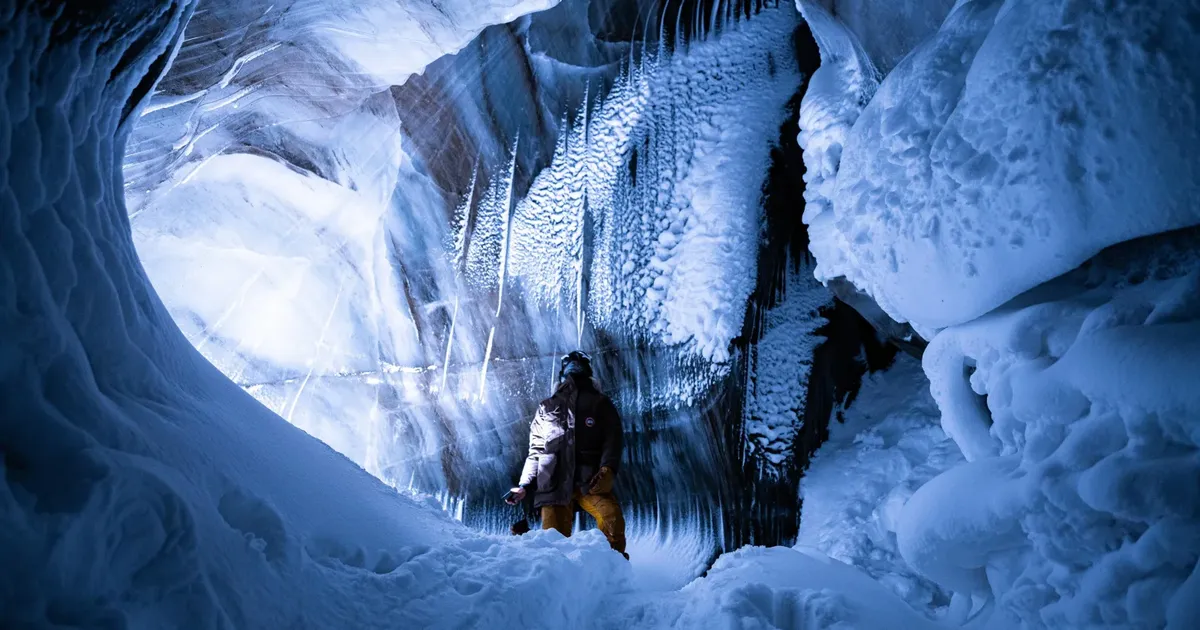
Walking inside a glacier is one of the more unusual things you can do in Svalbard. From the surface a glacier looks like one enormous block of snow and ice. Inside, seasonal meltwater can carve passages through it, leaving caves of blue ice, frozen channels and layered walls that change from one winter to the next.
Several guided ice cave tours run from Longyearbyen, and they are not all the same. You can reach a cave by snowmobile, by dog sled, on foot or as part of a longer glacier expedition. Some tours spend most of the day crossing the Arctic landscape before they reach the cave; others put much more of the day into the glacier itself.
The thing to understand before you book is that Svalbard’s ice caves are natural and keep changing. That is part of what makes the visit special, and it is also why a photograph on a booking page is an example of a cave, not a promise of that cave. Of the tours we compare, the ice cave adventure by snowmobile is the shortest way to see one, and it is the widget below.
Check Availability
Svalbard ice cave tours at a glance
| Tour style | Best for | Typical experience |
|---|---|---|
| Snowmobile + ice cave | First-time visitors, adventure | Fast access plus Arctic riding |
| Hiking + ice cave | Active travellers | More time on glacier terrain |
| Dog sled + ice cave | The classic Arctic experience | Huskies, glacier and a full-day adventure |
| Ice cave sleepover | Experienced, adventurous visitors | An overnight inside the glacier |
| Ice cave + frozen waterfall | Variety | Two winter ice features in one trip |
For most first-time visitors, snowmobile plus ice cave is the easiest balance of adventure, scenery and access. Only tours sold on GetYourGuide can be booked through this site, and that covers the snowmobile row and its private version. The hiking, dog sled, sleepover and waterfall combinations are booked directly with operators, and each is flagged in its own section below.
What is a Svalbard ice cave?
Svalbard’s glacier caves form largely from meltwater travelling through or beneath the ice. In warmer periods, water finds cracks, channels and weak points in the glacier. When winter returns, those passages can freeze and become safe to enter.
Inside, you may see:
- transparent ice
- deep blue sections
- sediment layers
- frozen waterfalls
- narrow passages
- sculpted ceilings
- bubbles trapped in the ice
- bands showing different periods of glacier formation
These are not permanent limestone caves. They are part of a moving glacier.
Are Svalbard ice caves natural?
Yes. The caves visited on guided tours are natural glacier features and not artificial tourist tunnels. Guides may prepare or maintain safe access to a particular cave each season, but the interior itself is made by the glacier. The cave you enter may not look exactly like photographs taken the previous winter.
When is the best time for ice cave tours in Svalbard?
Ice cave tours are a winter and spring activity. The listings we compare put the season at roughly November to April, when the meltwater channels are frozen, and our best-time-to-visit guide shows how that sits against the boat and aurora seasons. Some operators stretch it into May. Exact dates depend on:
- snow
- glacier stability
- temperature
- accessibility
- operator assessments
There is no single ice cave season that holds for every operator, so check the tour calendar for your own travel dates.
December and January: ice caves during Polar Night
December and January give you the darkest version of the trip. On the way to the glacier you may travel beneath stars, moonlight, complete Arctic darkness and, occasionally, the Northern Lights. The mood changes dramatically. The cave itself is lit by headlamps whatever the season, so you do not need daylight once you are inside.
February to April: the classic combination
For many visitors, February through April is the best balance. You can combine proper winter snow, snowmobiling, dog sledding, increasing daylight, glacier scenery and ice caves. It is also when the wider Svalbard snowmobile season is at its strongest.
May: late-season ice cave tours
Some tours continue surprisingly late. By then Svalbard is under the midnight sun, which makes a very different atmosphere from Polar Night: a bright Arctic landscape outside and a dark blue glacier world inside. Spring conditions change quickly, though, and a cave that was open in April may not be in May.
Can you visit an ice cave in summer?
Generally not. The classic glacier-cave experiences advertised from Longyearbyen are winter or spring tours, because warmer temperatures and meltwater change glacier conditions significantly in summer. Summer visitors usually turn to glacier boat tours, hiking, kayaking, wildlife safaris and glacier viewing instead, and our summer tours guide covers them. If entering an ice cave is one of your main reasons for visiting Svalbard, plan your trip for the colder season.
1. Snowmobile ice cave tours
For many visitors this is the most attractive option, because you get two Svalbard experiences in one. You leave Longyearbyen by snowmobile, cross frozen valleys and then continue on foot into the glacier.
The Ice Cave Adventure by Snowmobile is the clearest example. It is a 3.5-hour trip with no more than four riders per guide, and hot drinks, snacks and photography help are included. The operator says the day can run anywhere from about two and a half to four hours depending on group size and how confidently everyone rides. The longer snowmobile adventure and ice cave exploration takes about seven hours, includes a field meal, and gives the ride far more of the day. Both are newer listings with few reviews so far.
Why choose snowmobile plus ice cave?
Because the transport is part of the point. Driving through Svalbard’s winter landscape is one of the highlights of the day. You get snowmobile driving, broad Arctic valleys, frozen landscapes, glacier exploration and two completely different environments.
Best for
- first-time Svalbard visitors
- couples
- adventure travellers
- people who want maximum variety
- visitors with limited days
Possible downsides
- it requires comfort with snowmobile travel
- drivers need a valid licence
- wind chill can be substantial
- it is less cave-focused than a dedicated hiking tour
Do you have to drive the snowmobile?
Not necessarily, but you should check before you book. On many snowmobile excursions one person drives and one rides as a passenger. On the shared ice cave adventure above, anyone who wants to ride needs to carry a valid driving licence, and the operator gives no refund if you arrive without one. If you do not have a licence or simply do not want to drive, the private ice cave adventure by snowmobile puts you on the back with the guide driving. It is a shorter 2.5 to 3 hour trip for a single group, and it has very few reviews so far.
2. Hiking ice cave tours
Hiking tours suit people who want to earn their way to the glacier and not reach it quickly on a motor. We do not list one, so book directly with an operator.
Why choose a hiking tour?
The journey becomes part of the interpretation. You feel the transition from valley to moraine, to glacier, to cave, at walking speed. That gives your guide more chance to explain:
- geology
- glaciology
- permafrost
- landscape formation
- glacier movement
- Arctic ecology
Best for
- active travellers
- people interested in glaciers
- photographers
- visitors who dislike motorised tours
- travellers who want more time on foot
The trade-off
You need reasonable fitness. Expect snow, uneven ground, slippery sections, uphill walking and cold.
How difficult are hiking ice cave tours?
It varies, and distance alone is a poor guide. A few kilometres through snow, ice and glacier moraine, in winter clothing and Arctic temperatures, can take far more effort than the same distance on an ordinary footpath.
3. Dog sledding and ice cave tours
This is arguably the most atmospheric option. Instead of a snowmobile, you travel behind a team of huskies through the winter landscape. These trips are booked directly with the kennels and are not among the tours we compare. Our dog sledding guide explains what each version is like.
Why choose dog sledding plus ice cave?
Because it is much more than a cave visit. You meet and harness the huskies, learn to handle a sled, travel through a silent valley, see the glacier and possibly enter a cave, all with the feel of a full Arctic expedition.
Best for
- dog lovers
- couples
- photographers
- travellers who want a full-day experience
- people who prefer quieter travel
The main drawback
The cave may not be guaranteed. Because glacier conditions change, some dog-sled tours are glacier expeditions with a possible cave visit, and that is a different product from a trip built around the cave.
Snowmobile vs dog sled ice cave tour
| Snowmobile | Dog sled |
|---|---|
| Faster | Slower |
| Covers more distance | More intimate |
| Motorised | Traditional Arctic travel |
| Easier to combine with several sites | The journey is a major part of the experience |
| Driver may need a licence | No driving licence needed |
| More engine noise | Much quieter |
| Strong adventure feel | Strong expedition atmosphere |
Neither is better across the board; it depends on whether you want distance or atmosphere.
4. Ice cave and frozen waterfall tours
Some tours combine a glacier cave with other winter formations. This helps if you only have a few days in Svalbard, because instead of giving separate days to snowmobiling and to glacier exploration you get snowmobile, frozen waterfall and ice cave in a single excursion.
Best for
- first-time visitors
- short stays
- travellers who want variety
- photographers
We do not list a dedicated waterfall combination. The ice cave trips above do describe frozen waterfalls inside the cave itself, which is a separate thing.
5. Sleeping inside an ice cave
For travellers who find an ordinary cave visit too easy, overnight experiences exist. Some expeditions involve hiking to a natural glacier cave and sleeping in hammocks inside it. These are booked directly and are not among the tours we compare.
Best for
- experienced adventure travellers
- people comfortable with winter camping
- photographers
- visitors looking for an unusual overnight experience
Not best for
- first-time winter travellers
- people who dislike cold
- anyone who wants hotel comfort
- short Svalbard visits
What does it look like inside an ice cave?
Do not expect one enormous blue cathedral. Sections can differ dramatically. You may meet narrow corridors, low ceilings, transparent ice, deep blue walls, sediment bands, frozen streams, rounded meltwater channels, icicles, air bubbles and layered textures. Headlamps create much of the visual drama.
Are Svalbard ice caves blue?
Some sections can be. Glacial ice can look intensely blue because dense ice absorbs the longer wavelengths of visible light more readily. But do not expect every surface to be electric blue. Real glacier caves contain white ice, clear ice, blue sections, sediment and darker rock material.
How old is the ice?
It varies by glacier and location. One of the fascinating things about entering a glacier is that you can see layers of older snowfall compressed into ice over time.
Are ice caves claustrophobic?
They can be. Some caves have fairly spacious chambers, while others have narrow entrances, low ceilings and confined corridors. If you have significant claustrophobia, contact the operator before booking. The seven-hour snowmobile and ice cave trip lists claustrophobia among the reasons it is not suitable.
Do you have to crawl?
It depends on the cave. Some routes allow you to walk or crouch through most sections. Others may need crouching, ducking, using your hands for balance or moving through narrower passages, and this can change each season.
What equipment is provided?
Typical ice cave equipment may include:
- helmet
- headlamp
- spikes or crampons
- insulated outer clothing
- winter boots
- gloves
- a snowmobile suit on motorised tours
The exact list varies. The shared snowmobile ice cave trip provides a helmet and protective outer gear, while you bring your own base and mid layers. The longer trip adds a thermal suit, gloves, boots and a balaclava.
What should you wear underneath?
Even when outer clothing is supplied, wear proper layers. A useful setup is:
- a wool or synthetic thermal base layer
- a fleece or wool mid layer
- another warm layer if temperatures are particularly low
- warm wool socks
Our guide to what to wear on a Svalbard day tour goes into more detail.
Is an ice cave tour safe?
Guided tours operate with professional guides who assess glacier and weather conditions. A glacier is still a dynamic natural environment, and risks can include:
- slippery ice
- uneven terrain
- falling
- changing cave conditions
- cold
- glacier movement
- narrow spaces
This is why you should never look for and enter glacier caves by yourself.
Why do ice caves change every year?
Because glaciers move. They also respond to temperature, snowfall, meltwater, pressure, deformation and freeze-thaw processes. Channels may widen, collapse, close, shift or fill with snow or ice, and new ones may form elsewhere.
Can a tour be changed because of conditions?
Yes. Guides may change the cave, the route, the destination, the timing or the activities. Safety and current glacier conditions come before matching a photograph on a website.
Can children join ice cave tours?
Some can, but minimum ages differ between operators. Suitability depends on the type of transport, the duration, the cave terrain, the cold and how physically demanding the trip is. The seven-hour snowmobile trip, for example, sets a minimum age of 12. Always check the operator’s own age requirement.
Are ice cave tours good for photography?
Very. Translucent ice, headlamps and layered glacier textures can make excellent photographs. Useful equipment includes:
- a wide-angle lens
- a fast lens
- spare camera batteries
- a phone with strong low-light capability
- a lens cloth
Snowmobile ice cave tour vs dedicated ice cave hike
Choose snowmobile plus cave if you want:
- more variety
- Arctic driving
- less hiking
- more scenery over a larger area
- a strong first-time Svalbard experience
Choose a dedicated hike if you want:
- more physical activity
- glacier interpretation
- slower exploration
- less motorised travel
- more emphasis on the cave and the landscape
How long do ice cave tours take?
Day experiences vary a lot. Of the trips we compare, the private one takes 2.5 to 3 hours, the shared ice cave adventure about 3.5 hours (2.5 to 4 in practice) and the longer snowmobile and cave day about seven hours. Longer expeditions such as dog sledding to a glacier can fill most of a day. Do not compare prices without comparing duration: the seven-hour trip costs more than the shorter ones because it gives you far more time on the snowmobile.
Should you book an ice cave tour in advance?
Yes, if entering a glacier is one of your main priorities. Tour sizes are limited, seasons are short and not every cave tour runs every day. Our guide to booking Svalbard tours explains the order to reserve things in, and our where-to-stay guide covers hotels with easy pickup.
Which ice cave tour is best for first-time visitors?
For most first-time visitors, two formats stand out.
Best all-round option
Snowmobile plus ice cave. Of the tours we compare, the 3.5-hour ice cave adventure is the one with a rating record, 5.0 from six reviews, though six reviews is still a small sample.
Most memorable full-day option
Dog sledding plus a glacier or ice cave. For physically active travellers, a hiking cave trip can be even more rewarding.
Frequently Asked Questions
Are there ice caves in Svalbard?
Yes. Natural meltwater channels and passages form within glaciers, and several guided tours from Longyearbyen visit accessible caves during the colder season.
When can you visit an ice cave in Svalbard?
Most tours run between late autumn and spring. The listings we compare put the season at roughly November to April.
Can you visit a Svalbard ice cave in summer?
The classic Longyearbyen ice cave tours are winter and spring experiences.
How do you get to the ice caves?
Depending on the tour, by snowmobile, dog sled or on foot.
Do the caves look the same every year?
No. Glaciers move, and channels open, close and shift from one winter to the next.
Is an ice cave guaranteed on a dog-sledding glacier tour?
Not necessarily. Some dog-sled tours are glacier expeditions with a possible cave visit.
Do I need snowmobile experience?
Not for many beginner-friendly combination tours, but you do need a valid driving licence to ride your own machine, or a private trip where the guide drives.
Is an ice cave tour physically difficult?
It varies. A snowmobile trip is the least demanding on your legs, while a hiking tour asks for reasonable fitness.
Can you sleep inside a Svalbard ice cave?
Yes, specialist overnight expeditions exist.
How old is the ice?
It depends on the glacier and location.
Are Svalbard ice caves safe?
They should be visited with qualified local guides who assess current glacier conditions and provide the necessary equipment.
The bottom line
An ice cave tour is one of the rare Svalbard experiences where the destination itself may be different every year. Glaciers move, meltwater creates new channels, old passages close and new blue chambers appear.
For most first-time visitors, a snowmobile and ice cave combination gives the best balance of Arctic scenery, adventure and glacier exploration. For a slower and more atmospheric day, combine the cave with dog sledding. For active travellers who want to understand the glacier and not just arrive at it, choose a hiking tour.
Whichever version you book, do not choose it because of one spectacular photograph. Choose it because you want to step beneath the surface of a living Arctic glacier and see whatever the ice has made that winter. For a wider view of what to book across the year, see our guide to the best Svalbard day tours, and for the aurora side of a winter trip, the Northern Lights snowmobile tours guide. If you are planning a whole winter week, our winter tours guide puts the cave alongside dog sledding and the aurora, and the snowmobile tours guide covers every kind of ride.
Stand at the Door of the Global Seed Vault
Two hours by car to the concrete wedge in the mountainside, out through Adventdalen where the reindeer graze, and round Longyearbyen's mining heritage. Hotel pickup and a warm drink included — and it runs every month of the year.
Check Availability & Book