Svalbard Dog Sledding Tours from Longyearbyen: Winter Sleds, Summer Carts & What to Expect
Compare Svalbard dog sledding tours from Longyearbyen, including winter sleds, Polar Night trips, ice caves and summer dog carts. See seasons, difficulty and what to expect.
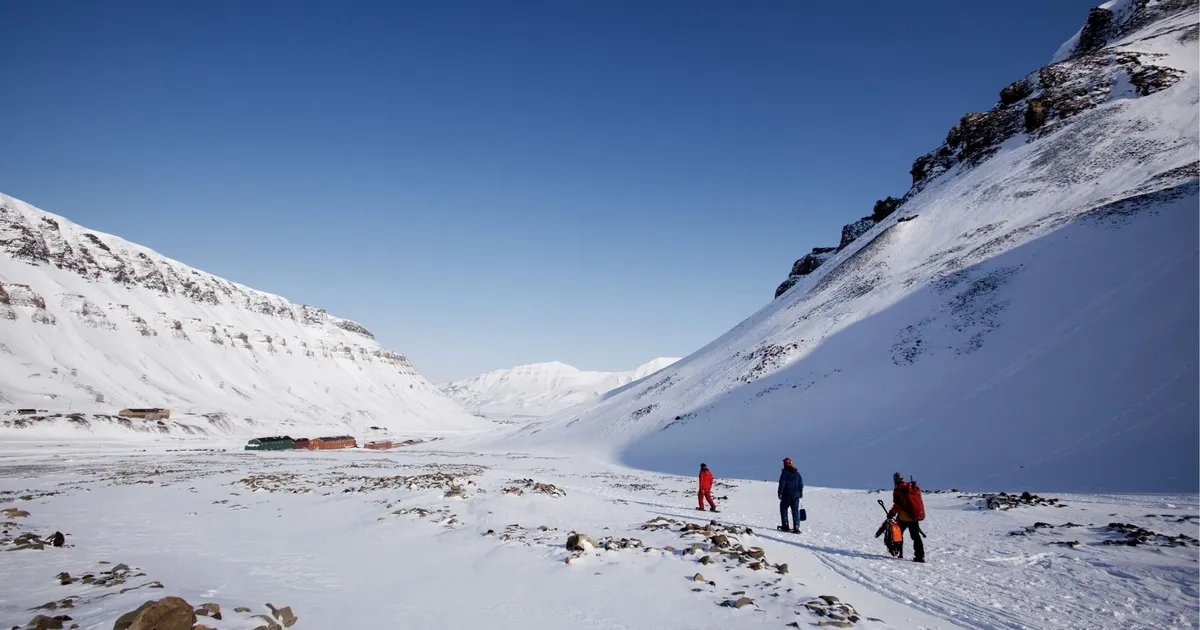
Dog sledding is one of those Svalbard activities that sounds as though it belongs entirely to winter. It does not. From Longyearbyen you can travel behind a team of energetic huskies through snowy valleys in winter and spring, under the darkness of the Polar Night in early winter, and even across the tundra on specially designed wheeled carts in summer and autumn. That makes it one of the most versatile things you can do on the archipelago.
The experience also varies more than most visitors expect. A short introduction at a kennel is very different from seven hours behind a dog team on the way to a glacier and a possible ice cave. So the question for a first visit is not “should I go dog sledding?” but “which type of Svalbard dog sledding suits my season, my fitness and my itinerary?”
One thing to know before you look for a date: dog sledding is largely booked directly with the kennels, not through the platform this site compares. The widget below books the winter snowmobile ice cave trip instead, the closest tour we can sell to a dog-sled day, and it is the alternative the guide keeps coming back to.
Check Availability
Svalbard dog sledding tours at a glance
| Experience | Best for | Typical season |
|---|---|---|
| Classic winter dog sledding | First-time visitors | Winter to spring |
| Polar Night dog sledding | Atmosphere and a possible aurora | November to early January |
| Dog sledding + glacier | A full-day adventure | Winter to spring |
| Dog sledding + ice cave | A major Arctic experience | Winter to spring |
| Short kennel + sled experience | Families, limited time | Winter |
| Dog sledding on wheels | Summer visitors | Late May to October or November |
| Dog wagon + tundra hike | Active summer travellers | Summer to autumn |
| Coastal dog wagon | Wildlife and huskies | Summer to autumn |
Is dog sledding in Svalbard worth it?
For many visitors, yes. In most tours transport is only a way to reach an attraction. Here, travelling with the dogs is the attraction. A typical trip can involve:
- meeting the huskies
- helping harness your team
- learning how to control the sled
- driving yourself
- swapping between driver and passenger
- travelling through valleys outside Longyearbyen
- stopping for photographs
- helping unharness the dogs afterwards
That participation is what makes the day feel so different from a conventional sightseeing tour.
Where do dog sledding tours leave from?
Most do not start in central Longyearbyen. Kennels are generally outside town, often in areas such as Bolterdalen, where there is more space and direct access to the Arctic landscape. Many operators include hotel pickup, the return transfer, Arctic outer clothing, boots, instruction and a guide, so you usually do not need your own vehicle. Our where-to-stay guide covers which hotels are easiest for pickup.
What happens on a typical dog sledding tour?
- Pickup in Longyearbyen. A vehicle collects you from your hotel or another designated meeting point.
- Transfer to the kennel. The drive normally takes you into one of the valleys beyond central Longyearbyen.
- Arctic clothing. Depending on the season, you may receive insulated overalls, winter boots, mittens, hats and headlamps.
- Meet the dogs. This is often the most enjoyable part. Sled dogs can get extremely excited once they realise they are about to run.
- Harness your team. On participatory tours, guests help put the dogs into harness and connect them to the sled or wagon.
- Driving instruction. You learn how to brake, how to help the dogs uphill, where to stand, how to keep your distance, what to do when stopping and how to respond to the guide.
- Head into the valley. Most tours pair two people on a sled. Typically one drives and one sits, and you switch later.
- Return to the kennel. After the run, you may help remove harnesses, thank the dogs and spend more time around the kennel before going back to Longyearbyen.
1. Classic winter dog sledding
For the postcard version, come when Svalbard has reliable snow. You travel on a traditional sled behind a team of huskies through snow-covered valleys.
Best for
- first-time dog sledders
- couples
- families with children of a suitable age
- visitors who want a half-day activity
- travellers who are nervous about committing to a full-day expedition
A shorter trip is often the best introduction.
2. Dog sledding during Polar Night
Dog sledding feels completely different when the sun disappears. During the Polar Night, the landscape may be lit by stars, moonlight, headlamps, an occasional aurora and the blue twilight at the edges of the season. Early winter does not guarantee perfect snow, so operators may need to adapt their equipment to the actual weather.
Can you see the Northern Lights?
Possibly. A dog sled can be an exceptionally atmospheric way to see the aurora, because there is less engine noise than on a snowmobile tour. But sightings are never guaranteed. If the aurora is your main reason for coming, the Northern Lights photography tour with a local expert is built around chasing clear sky, and our guides to Northern Lights snowmobile tours and aurora boat trips explain the other ways to look.
Dog sledding vs Northern Lights snowmobile tour
| Dog sledding | Snowmobile |
|---|---|
| Quiet | Motorised |
| Slower pace | Covers more distance |
| Strong connection with animals | Strong expedition feel |
| Traditional Arctic transport | Modern Arctic transport |
| Less ability to chase clear skies | Greater mobility |
| The journey is the experience | Destination and range often matter more |
3. Dog sledding to a glacier
Longer trips take you far beyond a basic kennel loop. The absence of snowmobiles on some routes can make these journeys particularly peaceful. You hear runners over snow, dogs breathing, harnesses moving and the wind, and no engines.
Best for
- travellers with a full day available
- photographers
- people who already know they like dog sledding
- visitors who want a stronger wilderness experience
4. Dog sledding and ice cave tours
One of the most complete winter experiences combines dog sledding with a glacier and a possible ice cave. The operator may note that the cave changes from year to year and that access depends on conditions. Do not read “dog sledding and glacier tour” as “ice cave guaranteed”. Natural glacier conditions decide what is possible, and our ice cave tours guide explains why.
Why choose this combination?
Because you get several distinct experiences in one day:
- a husky kennel
- dog sledding
- an Arctic valley
- a glacier
- a possible ice cave
- a wilderness meal
If you would rather reach the cave by snowmobile, the ice cave adventure by snowmobile is the bookable version: a 3.5-hour ride with no more than four riders per guide. It has six reviews so far, all five stars.
Is the full-day dog sledding trip difficult?
It can be. Driving a dog sled is more physical than standing behind the team. You may need to brake, balance, help push uphill, run alongside briefly and stand for long periods, and you are exposed to cold for several hours.
Do you drive the dog sled yourself?
On many tours, yes. Two participants often share one sled and switch roles, driver to passenger and back. You do not need previous mushing experience on beginner-oriented excursions.
Is dog sledding hard to learn?
The basics are fairly simple, but controlling a sled takes attention. You need to understand braking, balance, spacing, stopping, when to help the dogs and how to behave around the team. The guide controls the group and sets the pace.
Do the dogs enjoy running?
Working huskies are bred and trained for endurance and pulling. One of the first things many visitors notice at a kennel is how excited the dogs get when the harnesses appear. A responsible tour should also give the dogs suitable rest, appropriate workloads, water, veterinary care and conditions fit for running. If animal welfare matters strongly to you, research the operator’s approach.
5. Summer dog sledding on wheels
When the snow disappears, many kennels keep exercising their dogs with specially designed wheeled wagons or carts. This makes dog mushing available across much of Svalbard’s summer and autumn tourist season.
What is dog sledding on wheels like?
Instead of a sled with runners, the huskies pull a purpose-built cart. The structure is surprisingly similar to winter mushing. You normally meet the dogs, help harness the team, learn how to drive, share the cart with other guests, swap drivers and travel through valleys or coastal terrain.
Is summer dog sledding worth it?
Yes, if you judge it as its own experience and not as an imitation of winter. You do not get snow-covered valleys, sled runners or the classic winter scenery. You do get huskies, mushing, tundra, mountains, the chance of wildlife and, for part of the season, the midnight sun.
Winter sled vs summer wagon
| Winter dog sled | Summer dog wagon |
|---|---|
| Classic Arctic imagery | Unusual summer experience |
| Snow-covered landscape | Tundra landscape |
| Colder | Generally milder |
| Traditional sled | Wheeled cart |
| Possible Polar Night | Possible midnight sun |
| Ice caves and glaciers possible | Hiking and wildlife combinations possible |
If dog sledding is a lifelong bucket-list item and you can choose your season, winter is the iconic version. Our summer tours guide shows where the wagon fits among the other summer options.
6. Dog wagon through Adventdalen
Adventdalen is one of the most common landscapes for summer husky tours. Possible wildlife includes reindeer, birds, Arctic fox and other tundra animals. That gives summer dog sledding a second appeal: it becomes a wildlife and landscape excursion, not simply a kennel visit. If a kennel place is not available, the wildlife safari and slow hiking photography tour looks for the same animals by van.
7. Coastal dog wagon tours
Not every summer dog trip stays inland. Some routes follow the Arctic coast, combining huskies with sea views and possible wildlife. As always, wildlife cannot be guaranteed.
8. Dog sledding and tundra hiking
Some longer summer tours combine mushing with walking. This works particularly well if you have already booked a boat tour and want your next big day to be entirely on land. Our Longyearbyen day tours guide lists the land options by season.
Best for
- active summer travellers
- people with five or more days in Svalbard
- wildlife enthusiasts
- visitors who want more than a quick kennel experience
Can children go dog sledding?
Often yes, but age limits vary considerably. The right minimum age depends on the season, the temperature, the duration, the route, whether the child drives or rides and the operator’s rules. A three-hour summer wagon excursion may suit a young child far better than a seven-hour winter glacier expedition.
Is dog sledding good for families?
It can be one of the best Svalbard activities for families, because children often enjoy the kennel almost as much as the ride. Shorter tours are generally easier. Look for:
- a reasonable duration
- a warm shelter
- a straightforward route
- a suitable minimum age
- hotel pickup
- clothing included
What should you wear?
Winter operators commonly provide substantial outer clothing. Depending on the tour, this may include an insulated suit, winter boots, mittens, a hat and a headlamp. You still need warm layers underneath, and our packing guide explains which. In summer, do not assume ordinary warm-weather clothing is enough, because Svalbard’s summer can still be cold, windy and wet.
How long do tours last?
Short or introductory
Around 3 to 4 hours. Good for first-timers, families and short stays.
Half-day
Around 4 to 5 hours. Good for winter mushing, visitors who want more actual trail time and anyone combining it with an evening activity.
Full-day
Around 6 to 7 hours or more. Good for glacier trips, ice caves and wilderness experiences.
Dog sledding vs snowmobile: which should you choose?
Choose dog sledding if you want:
- quiet
- traditional Arctic travel
- interaction with animals
- a slower pace
- active participation
Choose a snowmobile if you want:
- speed
- greater distance
- large-scale landscape exploration
- access to more remote routes
If you have at least four or five days in winter, doing both gives you two completely different perspectives. Our snowmobile tours guide compares the snowmobile options, from short rides to the East Coast, and the winter tours guide shows how to fit both into one trip.
Dog sledding vs reindeer sledding
Svalbard is not known for tourist reindeer-sled excursions in the way parts of northern Scandinavia are. Its established mushing culture centres on working huskies.
Is dog sledding better in December or March?
December: expect Polar Night, darkness, stars, a possible aurora, colder-feeling conditions and shorter visual horizons.
March: expect returning sunlight, larger landscapes around you, classic snowy scenery, a strong spring snow season and longer expedition possibilities.
Choose December for atmosphere and March for landscape and daylight. Our best-time-to-visit guide and the winter versus summer comparison cover the wider calendar.
Is dog sledding available in May?
Yes, depending on snow and the operator. Late May sits very close to the change from runners to wheels, and conditions decide which equipment can be used.
Is dog sledding available in September?
Yes. September is mainly a wheeled-cart season, and it can be an attractive one: autumn colours appear, darkness begins to return, temperatures drop and the Northern Lights become possible again.
Do tours include hotel pickup?
Many do. Always check the exact booking, because meeting procedures vary between operators.
Should you book dog sledding in advance?
Yes, if it is one of your priority Svalbard experiences. Group sizes are limited by the number of dogs, the available sleds, the guides and the trail conditions, and popular winter periods can sell out. Our guide to booking Svalbard tours explains the order to reserve things in.
Which dog sledding tour is best for first-time visitors?
Winter: choose a 3 to 4 hour classic dog-sledding tour.
If you want one big winter experience: choose dog sledding plus a glacier or ice cave.
Summer: choose a 3 to 4 hour wheeled-cart excursion through Adventdalen.
Who should choose the full-day tour?
A full-day dog-sled adventure makes most sense if:
- dog sledding is one of your top reasons for visiting
- you enjoy active travel
- you can handle several hours outdoors
- you want to reach a glacier
- you prefer one substantial experience to two small tours
For a wider look at what to book across the seasons, see our guide to the best Svalbard day tours.
Frequently Asked Questions
Can you go dog sledding in Svalbard?
Yes. Longyearbyen has several established husky operators offering winter sled trips and summer wheeled-cart excursions.
Can you dog sled in Svalbard in summer?
Yes. When there is no snow, huskies pull specially designed wheeled wagons or carts.
Do you drive the dog sled yourself?
On many tours, yes. Two guests commonly share a sled or cart and switch between driving and riding.
Do I need previous dog-sledding experience?
No, not for most introductory tours.
Can you combine dog sledding with an ice cave?
Yes. Some winter and spring expeditions travel by dog sled towards glaciers and enter an ice cave when conditions permit.
Is the ice cave guaranteed?
Not always. It depends on natural glacier conditions.
Can you see the Northern Lights while dog sledding?
Potentially, during the dark season, but aurora sightings cannot be guaranteed.
How long does dog sledding take?
Short experiences generally last around three to four hours, while full-day glacier trips can last six to seven hours or longer.
Are clothes provided?
Many winter tours provide insulated clothing, boots, hats and mittens. Summer operators may also supply warm or waterproof outer clothing.
Do tours pick you up from your hotel?
Many do.
Which is better: dog sledding or snowmobiling?
They are very different. Dog sledding is slower, quieter and more interactive; snowmobiling covers greater distances and feels more like a motorised expedition.
The bottom line
Dog sledding is one of the rare Svalbard activities that can work in almost every season. In winter, you stand behind a team of huskies as they pull you across snow-covered valleys. During Polar Night, you can travel beneath stars and perhaps the aurora. In spring, longer dog expeditions can reach glaciers and ice caves. When summer removes the snow, the dogs keep running, only now they pull wheeled carts through tundra and Arctic valleys.
For a first visit, a short classic dog-sled trip is the easiest choice. For a major winter adventure, choose dog sledding plus a glacier or ice cave. For summer, do not dismiss the wheeled version: the absence of snow changes the landscape but not the energy of a husky team that wants to run.
Whichever version you choose, the most memorable moment may not be a glacier, a mountain or a Northern Lights display. It may simply be the instant the brake is released, the barking stops and your team starts running into the Arctic.
Stand at the Door of the Global Seed Vault
Two hours by car to the concrete wedge in the mountainside, out through Adventdalen where the reindeer graze, and round Longyearbyen's mining heritage. Hotel pickup and a warm drink included — and it runs every month of the year.
Check Availability & Book